Australian Casino Parlours and Pokies: What to Know
 Available in AU
Contents
The guide separates land-based casino licensing from online claims and explains how to assess access, offers and review language.
What a Casino Parlour Means in Australia
In Australia, “casino parlour” is best read as an informal description, not as a distinct class of gambling licence. It can suggest a room or gaming area within a larger venue, or simply be used as another name for a casino. The distinction matters: a physical casino is a land-based venue operating under a licence issued by its state or territory. The word “parlour” does not, by itself, identify a separate regulatory category.
The term can also appear in the name or description of a website. That use does not turn the website into a physical venue, nor does it establish that the service has the same status as a casino operating under a local venue licence. The wording overlaps; the arrangements behind it do not. That is the useful starting point.
From the industry side, labels tend to compress several ideas into one. “Casino” can refer to a licensed property, while “parlour” may evoke a smaller, more intimate room. In ordinary Australian usage, however, the phrase does not reliably tell anyone what kind of venue is being described, what licence applies, or whether the place is a standalone business or part of a larger property. Those details have to be understood from the venue itself, not inferred from its label.
Choosing a pokies parlour casino in Australia means weighing the details that matter to your visit, such as licensing, deposit options and payout information. Use these short notes as a reference when deciding which operators to explore.
1. Lucky Dreams
License: Curacao · Min. deposit: A$20 (POLi)
Lucky Dreams lists a Curacao licence and accepts a minimum deposit of A$20 via POLi.
2. GoldenCrown
License: Curacao Gaming Control Board OGL/2023/176/0095 (Hollycorn N.V.)
GoldenCrown lists a Curacao Gaming Control Board licence, OGL/2023/176/0095, held by Hollycorn N.V.
3. Wild Tokyo
License: Curacao · Payout speed: crypto 30-60 minutes, fiat 1-5 days · Min. deposit: A$10
Wild Tokyo lists a Curacao licence and a minimum deposit of A$10. Its stated payout times are 30–60 minutes for crypto and 1–5 days for fiat.
4. Ricky Casino
Payout speed: crypto under 1 hour, PayID 1-3 business days · Min. deposit: A$20 (A$30 to qualify for the bonus)
Ricky Casino lists crypto payouts in under an hour and PayID payouts in 1–3 business days. The minimum deposit is A$20, or A$30 to qualify for the bonus.
5. JustCasino
License: Curacao Gaming Control Board
JustCasino lists a Curacao Gaming Control Board licence.
6. Uptown Pokies
License: Curacao (operating since 2017) · Min. deposit: A$20
Uptown Pokies lists a Curacao licence, has operated since 2017, and has a minimum deposit of A$20.
7. WinSpirit Casino
License: Curacao eGaming OGL/2024/923/0383 (Antillephone N.V.) · Min. deposit: A$30
WinSpirit Casino lists a Curacao eGaming licence, OGL/2024/923/0383, issued to Antillephone N.V. Its minimum deposit is A$30.
8. JeetCity Casino
License: Curacao eGaming (Dama N.V.)
JeetCity Casino lists a Curacao eGaming licence held by Dama N.V.
9. Rollero Casino
License: Curacao Gaming Control Board OGL/2023/176/0095 (Hollycorn N.V.)
Rollero Casino lists a Curacao Gaming Control Board licence, OGL/2023/176/0095, held by Hollycorn N.V.
10. MrPacho
Payout speed: crypto 30-120 minutes, fiat 24-72 hours · Min. deposit: A$30
MrPacho lists crypto payouts in 30–120 minutes and fiat payouts in 24–72 hours. Its minimum deposit is A$30.
Australia’s land-based casino industry is regulated by state and territory authorities. Each property operates under a licence issued in its own jurisdiction. That structure is why a casino is not simply interchangeable with every other place offering gambling: the local licence and the venue’s permitted operations define its position. A phrase such as “pokies parlour casino” may describe the subject in broad terms, but it does not replace those distinctions.
A specialist review has reported that Australia has more than 20 full-scale casinos across all eight states. That figure is a snapshot from a secondary review, rather than a permanent count built into the meaning of “casino parlour.” Venues and market descriptions can change, so the number is best understood as the review’s account of the market, not as a definition. What remains clear is that the country has a land-based casino sector governed through local licensing arrangements.
The word “parlour” can also create an impression of scale. It may sound like a small, dedicated room with a particular atmosphere, but the name alone cannot confirm the size or layout of a property. A casino may contain different areas and facilities under one roof. Calling one of those areas a parlour does not necessarily mean it is an independent venue or a separate casino. The label is descriptive, not conclusive.
Best pokies in Melbourne: checking venues
That is where casual usage can become confusing. Someone asking about a “pokie parlour” may mean a gaming area in a casino, a land-based gambling venue more generally, or a site using similar words online. Those are not the same thing. A physical venue has a location and operates within the licensing framework of its jurisdiction. A website is a digital service; similar vocabulary cannot establish that it is a licensed Australian casino. The name may sound familiar. The underlying arrangement still needs to be distinguished.
I have seen how much work a short label is expected to do in this business. It signals an atmosphere, gives a reader a quick category and may make a venue sound more specialised than it is. But the label is not a reliable guide to the operating model. “Parlour” can be a convenient shorthand; it cannot tell the whole story.
The cleanest way to understand the phrase is therefore to separate its parts. “Casino” points to the land-based market when it refers to a physical property operating under a state or territory licence. “Parlour” may describe a room or serve as loose wording for a gaming venue, but it does not establish a separate legal status. When the same language is used online, it remains a label rather than proof of a physical venue or its regulatory standing.
That distinction keeps the subject grounded. A parlour casino in Australia, in the ordinary land-based sense, is not defined by a search phrase or a particular style of room. It is understood through the physical venue and the jurisdictional licence under which that venue operates. Similar wording on a screen is a different proposition. Same words. Different setting.
In Australia, a "casino parlour" is a descriptive term and not a distinct class of gambling licence; physical casinos operate under licences issued by their respective state or territory authorities.
Where Casino Venues Are Located
Australia’s gaming venues are spread across cities and regional areas, rather than concentrated in one national casino district. A specialist review counts gambling facilities in 147 Australian cities, but that is a snapshot from a secondary source, not a fixed measure of the market. Venue counts can change as properties open, close or are classified differently.
The same kind of review identifies Sydney, New South Wales, as the country’s largest gambling city, counting 11 facilities there. That figure describes a city-level grouping of venues; it does not mean every facility is a casino. The distinction matters on a map. A search for a casino in Sydney may point to a major casino property, while broader listings can also include other gaming venues.
The Northern Territory offers a more dispersed example. A specialist review records three casinos across three cities in the territory, with Alice Springs counted as the city with the most: one. Lasseters Casino is at 93 Barrett Drive in Alice Springs, NT 0870. The address places it within the town rather than in a remote area outside it. Still, a city count alone says little about how far a venue is from a traveller’s accommodation or transport.
Other verified locations show how different the geography can be. Jupiters Gold Coast Casino & Hotel is on Broadbeach Island, on the Gold Coast. Country Club Casino is listed on Country Club Avenue in Prospect, within Meander Valley. These examples place venues in distinct settings: a coastal urban destination and a Tasmanian regional area. They are useful landmarks, not a complete directory.
Best pokies in Canberra: hours and availability
In practice, the jurisdiction matters as much as the city name. Australian casino properties operate under licences issued by their respective state or territory, so a venue’s location also identifies the local authority responsible for its casino licence. The borders are administrative, but they shape how a property is overseen.
I have found that broad labels can blur the map. “Casino” may refer to a specific licensed property, while “gaming venue” can cover a wider class of places. A count of gambling facilities is therefore not automatically a count of casinos. The label matters.
For anyone comparing locations, the most useful starting point is the named property and its suburb or regional district, not a national total alone. Sydney’s reported facility count, the Northern Territory’s spread across cities, and the named venues in Alice Springs, Broadbeach Island and Meander Valley describe different scales of geography. They should not be read as a live inventory: secondary listings can change, and a venue count is only as precise as the category being counted.
Opening Hours, Entry and Venue Access
Major Australian casino venues operate around the clock, so “open” does not necessarily mean every part of a property has identical access conditions. The casino floor, dining areas and other facilities can each have their own entry arrangements. I learned to separate the building’s operating hours from the rules that apply to a particular space. A late-night opening is not a promise of unrestricted access.
The minimum age for casino entry is 18 across Australia. Valid photo identification is required for entry to major casinos; the age rule is not a substitute for proving identity. Staff may need to establish both who someone is and whether they meet the entry threshold. Keep the distinction clear.
Do
- Bring valid photo identification for entry
- Verify the membership status of the specific venue
- Check the specific access rules for different areas
Don’t
- Assume a late-night opening means unrestricted access
- Rely on the “VIP” label as a universal access category
- Assume age 18 is a substitute for proving identity
“VIP” is a label, not a universal access category. In practice, it may refer to a venue’s own arrangements for particular areas or guests, but the phrase alone does not establish what access is available or who qualifies. The details depend on the property. No standard entitlement follows from the wording.
Crown Sydney is a specific case: its casino operates as a members-only casino, rather than as a casino floor open to the general public. That qualification matters when interpreting references to a premium or VIP parlour. A description of a room or service does not override the venue’s entry status.
I would check the conditions for the particular venue and facility before treating a stated opening time as a complete access guide. Hours tell when a property operates; age, identification and membership conditions determine whether someone can enter the relevant area. Those are separate checks. No implied pass.
Parlour Pokies and the Casino Machine Context
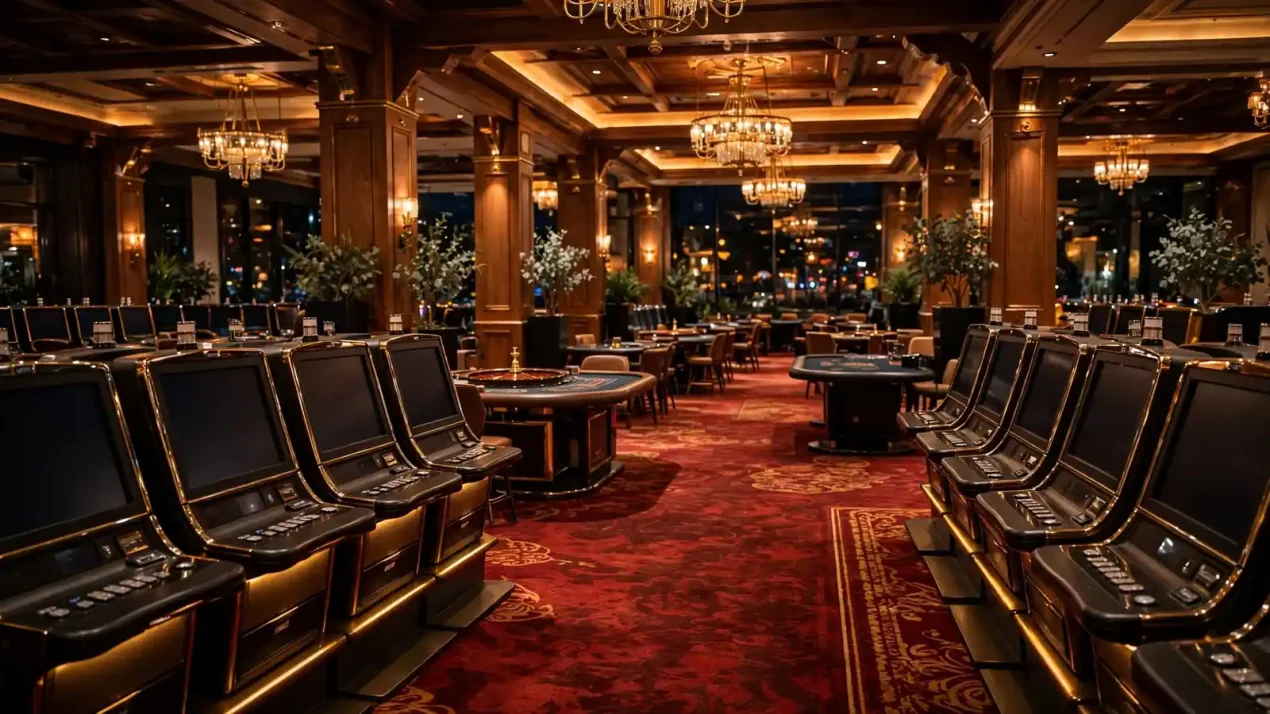
“Parlour pokies” can suggest a separate category of machine, but the wording does not identify a distinct technical class. In a casino, it points to the gaming-machine floor: machines installed within a licensed venue, rather than a standalone online catalogue. The label describes the setting and the way people refer to it, not a guarantee about what is available at a particular property.
Best Pokies in Perth: Hours, Venues and What’s Verified
The national count gives a firmer picture of scale. Australian casino venue licences endorse and record 3,308 gaming machines installed across casinos. That is a count of machines, not a promise that every machine is in service or accessible at every moment. Nor does it mean the machines are distributed evenly between venues. The total describes the licensed casino estate as a whole.
From the counter side, the distinction matters. A machine count is an operational and licensing measure; it does not explain the layout, the mix of equipment or the experience on a particular floor. Those details belong to individual venues and can change. A phrase such as “parlour pokies” may be used broadly, but it should not be read as evidence of a uniform national offering.
The word “pokies” also belongs to everyday Australian usage, while venue records tend to use the more formal term “gaming machines”. Both can refer to machines on a casino floor, but neither term on its own says anything about a machine’s features or likely result. The useful fact here is the licensed installed total, not an implied catalogue.
That keeps the subject grounded: casino machines are physical equipment within licensed venues, and the national figure counts those installed across the country. Nothing more is implied.
Playing Online: What a Website Does—and Doesn’t—Prove
An online page can look like a casino without establishing what stands behind it. I have learned to separate the visible layer—the name, graphics, sign-in screen and games—from the question that matters: whether the service is authorised to provide what it offers to people in Australia. Those are different things. A working page proves only that the page loaded.
Attention A functioning website, polished interface, or the ability to load a page does not prove that an online casino service is authorised to operate in Australia.
The same distinction applies when a site accepts account details or account traffic. That activity can make a service look operational, but it is not evidence of Australian authorisation. Nor does a polished interface, a familiar brand name or a page that refers to Australia settle the point. Presentation is part of the product; regulatory status is a separate matter.
This is especially easy to miss when a page uses the language of a physical gaming venue. A “parlour” can suggest a particular kind of place, but online wording does not turn a website into a land-based venue or establish that an online service has the status implied by its branding. The name on the screen is not the same as the legal standing of the operator.
Free-play pages need the same careful distinction. A page may let someone view a game or use a non-cash mode, but that feature alone says little about the service behind it. It does not verify an Australian licence, and it should not be treated as proof that a real-money version is authorised. I look at the function being presented and the claim being made separately. One does not validate the other.
Addresses can complicate the picture. Website blocking may affect which domains resolve through Australian internet service providers, while alternate addresses can appear over time. A specialist review may describe a service moving between addresses, but that report is still not proof that the new address is authorised. A changed web address can alter how a page is reached; it does not, by itself, alter the status of the service.
That is why access is a poor test. A site opening on a device does not show that the operator has approval. A site failing to open does not tell the whole story either: the address may be affected by blocking or other access issues. The result in a browser is a technical result, not a regulatory decision. Short version: access is not authorisation.
Best pokies in Geelong: hours and venue checks
I also avoid treating a login screen as a meaningful checkpoint. It can be built to collect details and route account activity while leaving the central question unanswered. The same applies to an account dashboard or a page that appears to recognise Australian visitors. These features describe how the website behaves; they do not demonstrate the operator’s standing under Australian rules.
When online casino language appears beside a familiar venue-style name, the difference between the physical and digital settings matters. A land-based casino is a venue operating under a jurisdictional licence. A website using casino language is simply a website until its status is established by evidence beyond its own design, access or branding. The terms may look interchangeable in a headline. They are not interchangeable in practice.
For free-play searches, the useful point is narrow: a playable demonstration or non-cash mode does not certify the wider site. For online casino searches, the same rule holds. Neither a functioning page nor an alternate domain is a reliable shortcut to a conclusion about Australian authorisation. A website can be visible, active and carefully branded while that question remains unresolved.
No-Deposit Offers and Sign-Up Claims
“No deposit” sounds like a clean dividing line: an account can be opened, a benefit appears, and no payment is needed first. In promotional language, though, that phrase describes one part of a claim, not the full arrangement. It does not establish what the benefit is, whether it can be used as described, or what conditions are attached to it. Nor does it say anything reliable about whether the service is permitted to offer online casino gambling in Australia.
Common sign-up claim terms
Terms such as “sign-up bonus” or “no-deposit bonus” describe the moment a promotion is available or the absence of an initial payment, but they do not explain the conditions that follow registration or the legality of the service in Australia.
I learned to read these headlines as sales copy, not as a summary of the terms. “Sign-up bonus” identifies the moment a promotion is said to be available. “No-deposit bonus” adds a claim about whether an initial payment is required. Neither phrase, by itself, explains what happens after registration. The short version is designed to catch attention; the operative detail sits elsewhere.
That difference matters because a headline can be technically narrow while leaving a broad impression. A reader may infer that signing up produces something immediately usable, or that the word “free” means there is no meaningful obligation. The wording alone cannot support either conclusion. It may refer to an account credit, a promotional balance, or another form of incentive, each governed by its own stated terms. The label is not the terms.
A sign-up claim also does not confirm that everyone who creates an account qualifies. Promotional wording can be subject to eligibility rules, account checks, geographic restrictions, or other conditions. Those details can determine whether the claim applies at all. A prominent banner may make the offer look universal; the small print may narrow who can receive it or how it can be used. That is ordinary promotion design, but it is easy to miss when the headline does most of the work.
Pokies in Adelaide: Hours, Access and Venue Checks
“No deposit” should not be read as “no conditions.” It does not necessarily mean there is no registration process, no qualification criteria, or no restriction on the use or withdrawal of any advertised benefit. Those are separate questions. The wording is about the stated absence of a deposit as a prerequisite, not a guarantee that the rest of the arrangement is uncomplicated. A phrase can be accurate and still leave out the part that matters most to a decision.
The same care applies to sites using “pokies parlour” language. A familiar label can make an online page sound connected to a physical gaming venue, but similar wording does not prove that connection. In Australia, land-based casino venues and websites using casino-style language are not interchangeable categories. A promotional headline does not turn a website into a licensed local venue or establish that its online gambling service is authorised here.
Nor does the address in a browser settle the question. A site may load, accept account activity, or appear at a different web address from one seen before. None of those signs demonstrates Australian authorisation. An alternate domain is an address change, not evidence of a change in regulatory status. I would not treat a working page as a licence check. It proves only that the page is reachable at that moment.
This is why a no-deposit claim cannot be assessed in isolation from the service making it. A promotion may be described in polished language, with a clear button and a reassuring account process, while the underlying legal position remains unchanged. Under the Interactive Gambling Act 2001, providing real-money online casino-style gambling to people in Australia is prohibited. The promotional label does not create an exception.
Legal Prohibition
Under the Interactive Gambling Act 2001, providing real-money online casino-style gambling to people in Australia is prohibited.
In practical terms, the headline answers only a narrow marketing question: what does the operator say is required before the advertised benefit is offered? It does not answer whether the service is lawful in Australia, whether the claim applies to a particular person, or what restrictions govern the benefit. Those are distinct matters, and blending them is how a simple phrase acquires more weight than it can carry.
The claim is not the permission.
Free Chips and Spins: Read the Claim Carefully
“Free” is a price word, not a complete description of an offer. In casino-style promotions, free chips or spins suggest that play can begin without paying for the advertised starting credit. The wording does not, by itself, explain what the credit can be used for, whether any winnings can be withdrawn, or what conditions attach to the promotion.
I have learned to read the label as the beginning of a set of terms, not as their summary. A chip may be promotional credit rather than cash. A spin may be limited to particular games or may produce a balance that remains subject to restrictions. The important distinction is between being allowed to use something on screen and being entitled to keep or withdraw its value. Those are not the same thing.
The detail often sits outside the headline: in promotional terms, account rules or explanatory text elsewhere on a site. “Free” can describe the initial cost while leaving other conditions unstated in the banner. If the conditions are hard to locate, vague, or inconsistent with the headline, the claim is difficult to assess. A prominent offer and a clear explanation are separate things.
Pokies in South Australia: What the Evidence Shows
A “free chip” also should not be read as a cash payment. The phrase may refer to a unit of play within the site’s own system, with its value and use defined by the terms. Likewise, “free spins” describes a promotional mechanism, not a guaranteed return. Neither phrase establishes that a promotion is available to every visitor, that its stated value can be withdrawn, or that the site is authorised to provide the underlying service in Australia.
That last distinction matters. A polished offer page can make a claim look settled before its source has been checked. But presentation is not regulatory evidence, and promotional wording cannot turn a prohibited service into an authorised one.
Domain changes add another complication. A specialist gambling-market review reports that website blocking can affect which addresses resolve through Australian internet service providers, while alternate addresses may appear over time. A changed address can make an old promotion page, a new landing page and a site’s other materials harder to compare. It does not prove that the service has changed its status—or that it has acquired Australian authorisation. The address alone settles nothing.
I would treat a free-chip or free-spin headline as a claim to examine, not an invitation. The wording should be considered alongside the full terms and the identity of the service making it; an alternate domain does not remove the need for that distinction. If a promotion uses “free” prominently but leaves its practical meaning obscure, the uncertainty is part of the claim, not a minor footnote.
Free in the headline. Conditions underneath.
Promotional Offers
- “Free” labels describe initial costs, not the full set of terms
- Promotional credits may be limited to specific games or restricted from withdrawal
- Domain changes do not signify a change in regulatory status
- Presentation is not evidence of Australian authorisation
How to Read a Pokies Parlour Review
A review can sound precise while leaving the central question unanswered: what, exactly, has been checked? I have seen polished descriptions built from operator copy, with confident claims about trust, access or reliability but no clear account of how those conclusions were reached. The wording is not evidence by itself.
Start by separating observable details from verdicts. A review may describe a page, its branding or the way it presents its services. Those observations do not establish that the service is authorised to offer gambling in Australia. Nor does a reviewer’s positive rating change the legal status of the service being discussed. “Trusted” is a label; the useful part is the evidence and the limits attached to it.
Look for the basis of each material claim. Does the review say whether it consulted a regulator’s information, or does it rely on the operator’s own statements? Does it distinguish what was independently checked from what was merely reported? If those lines are blurred, a confident conclusion deserves less weight. A clear review tells readers what it could verify—and does not convert a lack of contrary evidence into proof.
The same test applies to details about domains. ACMA has taken website-blocking action against illegal gambling services. One specialist review reports that the action included alternate domains associated with Fair Go. That is a useful signal about enforcement and domain changes, not a blanket finding about every address that resembles a service’s name. An alternate domain can complicate the trail; it does not validate the service behind it. Nor should a review imply that a particular brand is authorised simply because an associated address remains reachable.
Reviews also need to keep their own interests visible. Affiliate links, commercial relationships and operator-supplied material can shape what gets emphasised. Their presence does not automatically make every factual statement false, but it matters when the review’s verdict is presented as independent. I look for a separation between description and recommendation, and for any disclosure to appear where it can inform the reader rather than being buried after the sales language. A disclaimer cannot make an unlawful promotion sound neutral.
A useful pokies parlour casino review should therefore be read as an argument, not a certificate. Its conclusion is only as sound as the trail it shows: the claims examined, the evidence used, and the uncertainties left unresolved. A list of attractive features or a string of reassuring adjectives cannot substitute for that trail. When a review treats accessibility, branding or a change of address as proof of legitimacy, it has crossed from assessment into assertion.
The practical reading is plain: separate what the reviewer observed from what the reviewer inferred, and treat regulatory signals as more meaningful than praise. ACMA’s blocking activity shows why old links and new domains can appear in the same account; it does not make a review’s verdict an official clearance. A careful review states that boundary. The rest is sales language.
Bonus Language and the Conditions Behind It
A “bonus” sounds like an extra balance, but the word describes a set of terms rather than money that can automatically be withdrawn. In an online casino promotion, the headline may be brief while the operative detail sits elsewhere: what activity qualifies, how any credited value may be used, and what must happen before a withdrawal is permitted. The label is the sales shorthand. The conditions do the work.
Pokies Open Near Me in Australia: Casino Hours
I have seen the same distinction at a counter: the advertised benefit attracts attention, while the rules determine its practical value. A bonus can be conditional, restricted to particular account activity, or subject to limits on how funds may be used. Those details are not minor print. They define what the promotion actually offers and what it does not. If the wording is vague, a reader cannot infer generous terms from the headline alone.
That distinction matters when a site uses language such as “parlour bonus” or “casino bonus” for an online promotion. A familiar phrase does not make the offer part of a physical Australian gaming venue, nor does it tell anything reliable about the operator’s standing under Australian law. The wording may borrow the atmosphere of a land-based parlour while describing a separate online service. Different setting. Different rules.
The address is no better as proof. A site may load, accept account traffic or appear under an alternate domain, but none of those circumstances establishes that it is an Australian-licensed online casino. A changed web address can make a service look newly available without changing what the service is or whether it is authorised for Australian customers. Access is a technical fact, not a regulatory finding.
For that reason, bonus language should be read as a description of promotional conditions, not as evidence of legitimacy or suitability. A polished page, familiar terminology and clearly laid-out rules may make the offer easier to understand; they cannot establish Australian authorisation. Nor does a benefit become meaningful merely because its headline sounds uncomplicated. The underlying terms matter, and the legal status of the service is a separate question.
In Australia, real-money online casino games are prohibited services when provided to people in the country. A bonus attached to such a service does not alter that boundary. The wording can explain how an operator frames an offer, but it cannot make the offer lawful or establish permission to provide it here. Keep those questions apart. The fine print is not a licence.
Real-Money Online Casinos and Australian Rules
A real-money online casino is not simply a land-based venue moved onto a screen. Under the Interactive Gambling Act 2001, operators cannot provide online casino games for money to people in Australia. The rule covers casino-style services such as slots, poker and table games. The boundary is about what the operator provides to people physically in the country.
The federal enforcer is the Australian Communications and Media Authority (ACMA). It monitors compliance with federal interactive gambling laws and can investigate services that provide or advertise prohibited gambling. Where a site falls within the Act, ACMA can ask Australian internet service providers to block access to it. A block is an enforcement measure, not a verdict reached by a browser or a customer.
The scale of action is substantial: ACMA says it has blocked more than 1,455 illegal gambling and affiliate websites since November 2019. That figure includes websites targeted after enforcement action; it should not be read as a count of casino operators alone. Domain names may change, but a changed address does not alter the underlying legal question. A different web address is not a different authorisation.
Withdrawal figures are reported inconsistently. One account says more than 210 illegal services have left the Australian market since ACMA began enforcing the rules in 2017; another gives the figure as over 190. The consistent point is that services have withdrawn following enforcement.
I have seen how a polished “real-money” label can make an online offer sound like an ordinary venue product. It does not. The governing distinction is federal: land-based casino licensing is handled by state and territory jurisdictions, while providing prohibited online casino gambling to people in Australia falls under the national law. The boundary is clear.
This material was created by the MafiaCasino Notes team.
Related posts

Pokies Open Near Me in Australia: Casino Hours
Trusted Online Casinos in Australia: What to Check