
Google Pay Casinos in Australia: What Claims Show
 Available in AU
Contents
Everyday mobile-wallet use does not establish casino acceptance, and deposit, game, and withdrawal support each require separate evidence.
Mobile Wallets in Australia—and the Gap Between Everyday Use and Casino Acceptance
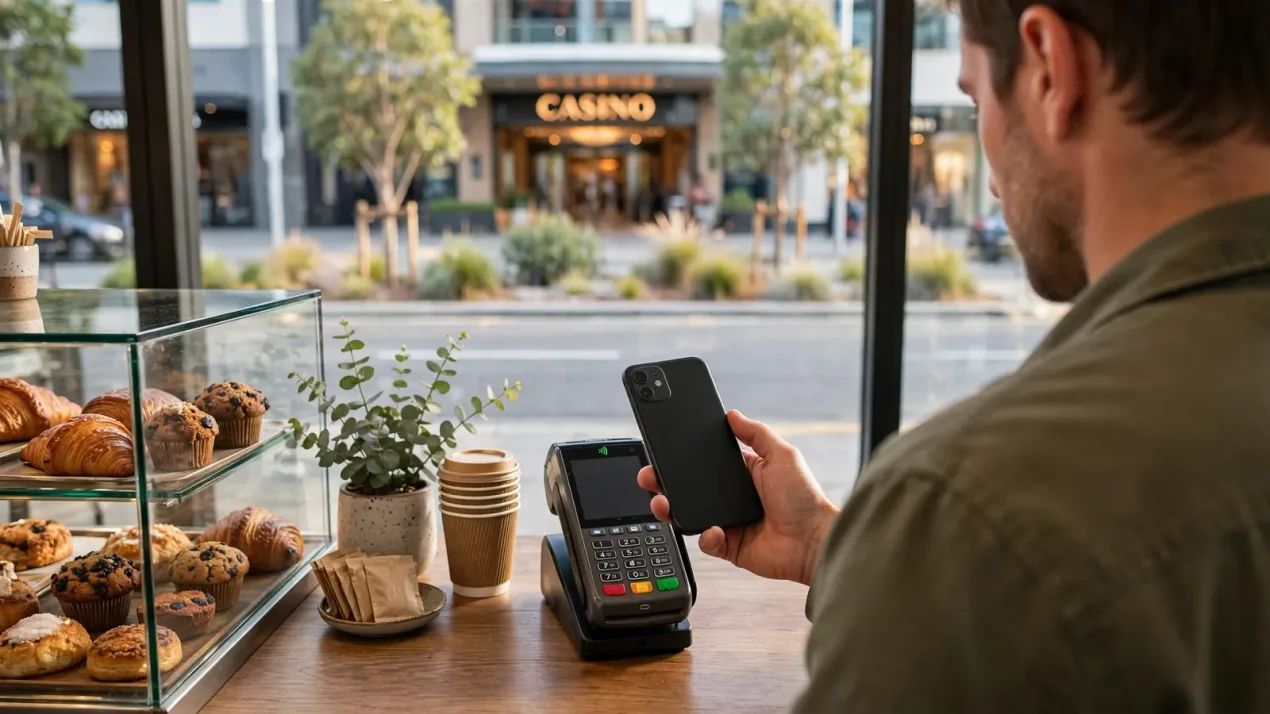
In Australia, paying by tapping a card or phone has become ordinary. Contactless credit and debit cards are accepted almost everywhere, and mobile wallets such as Google Pay and Apple Pay are similarly common across everyday retail. That familiarity shapes expectations: when a payment method works at a shop, it can seem reasonable to expect it to work wherever an online payment is offered.
That expectation needs a boundary. Acceptance in shops describes one part of the payment landscape; it does not establish what an online gambling operator accepts. The same wallet can be familiar and widely usable in daily life while remaining unavailable for a particular online service. Those are not conflicting facts. They concern different settings, with different participants and rules.
I have seen how easily a payment logo can do more work in a reader’s mind than it should. On a general retail page, a wallet logo may simply signal that the merchant takes that method. In a gambling context, the same symbol may be read as evidence that a site accepts the wallet, even when the symbol is only part of a general payment graphic or is not present in the actual cashier. A familiar brand is not a confirmation of a particular service.
Google Pay availability can depend on a casino’s current cashier options and your location, so check the payment methods before registering or depositing. This list provides a few stated operator details to help you assess the options.
1. Lucky Dreams
License: Curacao · Min. deposit: A$20 (POLi)
Lucky Dreams lists a minimum deposit of A$20 via POLi. Its stated license is Curacao.
2. GoldenCrown
License: Curacao Gaming Control Board OGL/2023/176/0095 (Hollycorn N.V.)
GoldenCrown lists a Curacao Gaming Control Board license, OGL/2023/176/0095, held by Hollycorn N.V.
3. Wild Tokyo
License: Curacao · Payout speed: crypto 30-60 minutes, fiat 1-5 days · Min. deposit: A$10
Wild Tokyo lists a minimum deposit of A$10. Its stated payout times are 30–60 minutes for crypto and 1–5 days for fiat, and it lists a Curacao license.
4. Ricky Casino
Payout speed: crypto under 1 hour, PayID 1-3 business days · Min. deposit: A$20 (A$30 to qualify for the bonus)
Ricky Casino lists a minimum deposit of A$20, or A$30 to qualify for the bonus. Its stated payout times are under 1 hour for crypto and 1–3 business days for PayID.
5. JustCasino
License: Curacao Gaming Control Board
JustCasino lists a Curacao Gaming Control Board license.
6. Uptown Pokies
License: Curacao (operating since 2017) · Min. deposit: A$20
Uptown Pokies lists a Curacao license, says it has operated since 2017, and has a minimum deposit of A$20.
7. WinSpirit Casino
License: Curacao eGaming OGL/2024/923/0383 (Antillephone N.V.) · Min. deposit: A$30
WinSpirit Casino lists a Curacao eGaming license, OGL/2024/923/0383, held by Antillephone N.V. Its minimum deposit is A$30.
8. JeetCity Casino
License: Curacao eGaming (Dama N.V.)
JeetCity Casino lists a Curacao eGaming license held by Dama N.V.
9. Rollero Casino
License: Curacao Gaming Control Board OGL/2023/176/0095 (Hollycorn N.V.)
Rollero Casino lists a Curacao Gaming Control Board license, OGL/2023/176/0095, held by Hollycorn N.V.
10. MrPacho
Payout speed: crypto 30-120 minutes, fiat 24-72 hours · Min. deposit: A$30
MrPacho lists a minimum deposit of A$30. Its stated payout times are 30–120 minutes for crypto and 24–72 hours for fiat.
Australian consumers are also accustomed to moving between payment types. Cards, mobile wallets and services linked to banks, such as PayPal, sit within the same everyday repertoire. The choice often depends on where a purchase is made and what the merchant offers. That flexibility can make a wallet feel like a universal layer over card payments. It is not. A method’s presence in ordinary commerce does not carry across automatically to every online merchant or industry.
The distinction matters especially when the word “casino” appears beside the name of a payment method. It can suggest a straightforward pairing: a familiar wallet on one side, an online service on the other. But the phrase alone tells nothing about whether the relevant operator offers that method, whether it is available to people in Australia, or whether the service itself can lawfully be provided here. Familiarity should not be mistaken for availability.
There is also a difference between a payment technology being common and a business choosing to support it. Retail acceptance says something about the breadth of use in shops. It does not reveal the decisions of an individual online business or the restrictions that may apply to its payment arrangements. A service may present a narrow set of options even when consumers routinely use a wider range elsewhere. Conversely, seeing a wallet used in one online setting would not establish acceptance in another.
Payments & Crypto for Australian Online Casinos
This is why broad phrases about Australian mobile payments can become misleading when carried into gambling. “Accepted almost everywhere” describes everyday acceptance in the stated context; it is not a promise that every merchant, platform or sector participates. In my experience, the most consequential misreadings often begin with a true general statement and then stretch it beyond its subject. The sentence remains plausible. The conclusion does not follow.
The same caution applies to the phrase “mobile casino.” It may describe a service accessed on a phone, but the device used to open a page does not determine which payment methods are accepted. Nor does the fact that a phone supports a wallet establish that an online gambling service integrates it. Device capability, consumer habit and merchant acceptance are separate matters.
For Australian residents, the legal setting is another reason not to treat an online casino payment claim as ordinary retail information. The Interactive Gambling Act 2001 prohibits operators from providing real-money online casino games to people physically located in Australia. The everyday presence of Google Pay does not change that legal position or turn an offshore gambling service into a locally authorised one.
So the practical context is clear, even without extending it into claims about particular sites: Australians commonly use contactless cards and mobile wallets, and are comfortable switching among cards, wallets and bank-linked services. That background explains why Google Pay may feel like a natural option. It does not establish that an online casino accepts it. A familiar habit is not a payment confirmation.
Legal Warning
The Interactive Gambling Act 2001 prohibits operators from providing real-money online casino games to people physically located in Australia.
What a Google Pay Deposit Claim Actually Needs to Establish
Calling a casino a Google Pay deposit option requires more than showing the Google Pay logo beside other payment symbols. The claim is specific: it says that a particular operator lets a customer in Australia use Google Pay to fund an account. Each part needs to hold up. The method must be Google Pay, the transaction must be a deposit, and the service must actually be available to people in Australia.
I have learned to separate a payment label from a working payment route. A logo can be decorative, outdated or included because a payment provider is available somewhere in a wider group of markets. It does not establish that the option appears in an Australian account’s cashier, that a transaction can be submitted, or that the operator accepts it. Marketing shorthand leaves those distinctions out.
What “accepts” should mean
For a deposit claim to be meaningful, Google Pay would need to be identified as an available method in the relevant cashier, with the deposit flow presented as a Google Pay transaction. That is different from a site accepting a card that may also be stored in a mobile wallet. The payment method named at checkout matters: a card payment made with a device is not automatically a Google Pay payment.
This distinction is easy to miss because the same card can be used in more than one way. A cashier may offer a card option, while a phone or browser separately provides a wallet interface. Unless the transaction is explicitly handled as Google Pay, describing it as a Google Pay deposit blurs the payment route. A familiar card brand does not settle the question.
Casinos That Accept Litecoin in Australia: What to Check
There is another gap between an option being displayed and an operator accepting a deposit. A method may appear in general payment information but not be enabled for every country, account or transaction. A credible claim therefore needs to match the cashier’s actual presentation for the Australian market, not merely a general page that describes payment methods across several locations.
The route matters more than the badge
Payment claims often compress several stages into one sentence. The customer chooses a method, enters or confirms payment details, submits a transaction, and receives an outcome. A logo addresses none of those steps by itself. It signals an association, not a completed route.
I would also look at whether the cashier names Google Pay directly or uses broad wording such as “mobile payments”. The latter could refer to different services, and the label alone does not identify which one is supported. If a description does not distinguish a wallet from a card transaction, it cannot carry the more specific claim.
The deposit amount is part of the claim when a page advertises a particular figure. A statement about a $10 deposit would need to establish that the amount is permitted for that payment route and market. It cannot be inferred from a general payment badge, nor from the fact that a cashier accepts deposits by some other method. Without a confirmed Google Pay route, a precise amount attached to it is just precision in the wording.
Do
- Verify the method is identified as Google Pay in the actual cashier
- Ensure the transaction flow is explicitly handled as Google Pay
- Match claims to the cashier presentation for the Australian market
Don’t
- Assume a logo beside other symbols confirms a working payment route
- Mistake a card payment made via a device for a Google Pay transaction
- Rely on general payment pages that describe multiple global markets
That is the difference between a payment possibility and an evidenced payment option. Small distinction. Material consequence.
What the claim does not establish
Even if Google Pay appears as a deposit choice, that alone says nothing about other parts of the account. It does not prove that the same method is available for every transaction, that a deposit will be approved, or that the operator has any particular processing speed. Those are separate claims and need separate support. They should not be smuggled into the word “accepts”.
Nor does a payment method’s broad availability in Australian shops establish its availability at an online gambling site. Australians may be familiar with mobile wallets in ordinary commerce, but that familiarity describes the retail environment, not an operator’s cashier. The two settings are not interchangeable.
That does not turn a search result, logo or generic payment statement into proof; it means the wording should remain narrower than the claim being made. A page can discuss what acceptance would require without presenting an unverified casino as an option.
A careful description would identify the operator, the Australian availability of the cashier option, and the transaction as a Google Pay deposit rather than a card payment or generic mobile-wallet payment. If any of those elements is unclear, the claim remains incomplete. Familiar branding is not the same as confirmation.
Assessing Site Claims Without a Verified Operator List
A label such as “best Google Pay casino” sounds like a comparison, but it only means something when the candidates and the basis for judging them are clear. Without that foundation, a ranking turns an untested payment claim into an apparent recommendation. I have seen how easily that happens: a confident heading can make a broad statement look like a checked fact.
The first distinction is between a site mentioning Google Pay and the operator actually making the wallet available for the relevant transaction. A payment logo, a general page about digital wallets, or a third-party description may not establish what the operator currently offers. Each claim needs to be tied to a specific operator statement and the precise function being described. Otherwise, the comparison starts with unlike evidence.
Casinos That Accept PayID in Australia: What to Check
The word “best” adds another problem. It implies that several eligible services have been assessed against shared criteria. Those criteria might concern whether a payment option is genuinely supported, how clearly its terms are explained, or whether the claim can be independently checked. But criteria cannot compensate for an unconfirmed starting point. A polished table does not create a meaningful comparison if its entries have not first met the same basic test.
I would not treat repeated mentions across review pages as independent confirmation. Several pages may be repeating one description rather than checking the operator’s own cashier or terms. The wording can circulate while the underlying offer changes. That is why the useful question is not how many times a name appears, but what the claim is based on and whether it describes the current service accurately.
Comparisons also need to keep unlike functions separate. A statement about a wallet as a payment option does not, by itself, establish every other role someone might associate with it. Nor does a broad label such as “Google Pay casino” tell anyone what the operator has actually confirmed. The narrower the claim, the easier it is to assess; the broader the label, the more it can invite assumptions.
This matters particularly in Australia, where ordinary experience with digital payments can make an online gambling claim sound more familiar than it is. A wallet being commonplace in everyday commerce does not establish that a gambling operator offers it. The two settings have different providers, policies and restrictions. Familiarity is not verification.
The same caution applies to rankings that use words such as “top” or “recommended.” Those terms are not neutral descriptions. They suggest that the listed services have passed a consistent review and that the order reflects a defensible judgment. If the underlying payment claim is uncertain, the ranking can lend it credibility it has not earned. Better presentation. Same uncertainty.
Casinos That Accept POLi in Australia: What to Verify
A sound comparison would need to show what was checked, when it was checked, and what the operator’s wording actually covers. It would also need to distinguish confirmed details from interpretation. If those steps cannot be described plainly, a ranked list is less informative than a careful explanation of what the claim does—and does not—establish.
I therefore avoid treating a collection of unconfirmed labels as a shortlist. Naming operators would give the appearance of endorsement, while comparing them would imply a common evidential basis. Neither follows simply from seeing a payment method mentioned in a description. The responsible standard is modest: make no comparative claim stronger than the evidence supporting each entry.
Why “Instant” Does Not Verify a Google Pay Cashout
“Instant” is a speed claim, not a description of the payment route. In casino payment copy, it can sound as though a withdrawal request, approval and arrival of funds are one event. They are not necessarily the same step. A quick instruction or status update would not, by itself, establish that money reached an account through Google Pay.
I separate the wording from the mechanism. A cashout claim needs to identify Google Pay as the method used to return funds, rather than merely showing the wallet among deposit options or mentioning fast payments in general. Even then, a speed label cannot confirm which stage it describes. It may refer to the operator’s handling of a request, the payment provider’s processing, or the point when funds become available. Those are distinct claims.
That distinction matters because “instant withdrawal” compresses a chain of events into two words. The phrase does not say whether the casino accepts the request, whether any checks remain, or whether the destination account receives the money immediately. Nor does the word “Google Pay” settle those questions. A familiar wallet name can make a claim sound precise while leaving the actual cashout process unclear.
From the other side of the counter, I learned to treat speed language as a label that needs a defined starting point and endpoint. Without those, it is difficult to compare one claim with another. “Instant” may describe only one part of the process; it is not a measured duration for the complete withdrawal. A polished badge is not a payment record.
An "instant" speed label may refer to different stages: the operator’s request handling, the payment provider’s processing, or the point when funds become available.
The same care applies to phrases such as “fast cashout” or “instant payout”. They describe an impression unless the operator explains what event starts the clock, what counts as completion, and which payment method carries the funds. They should not be read as proof that Google Pay is available for withdrawals, or that a withdrawal made with it would arrive at a particular speed.
I would also keep deposit and withdrawal language separate. A wallet being accepted when money goes in does not make it the route by which money comes back. And a general statement about rapid transfers cannot fill that gap. The method and the speed are separate parts of a claim; each needs its own clear meaning.
There is a larger Australian context behind these claims. The Interactive Gambling Act 2001 prohibits operators from providing real-money online casino games to people in Australia. Australian consumer law does not protect people who use offshore casinos. That makes promotional wording about cashouts especially poor grounds for treating an offshore service as safe, available or legally authorised.
So “instant” should be read narrowly: as a description whose scope needs clarification, not as confirmation of a Google Pay cashout or a promise about when funds will arrive. The wording alone cannot establish either. A speed adjective is not a settlement record.
Reading the 2026 Search Claim Carefully
The year in “casinos that accept Google Pay in Australia in 2026” is a time label, not evidence of a new payment option. It can indicate that a page was prepared or refreshed for that year. It does not, by itself, establish that a casino accepts Google Pay, that the service is available to people in Australia, or that any stated terms remain current.
Casinos That Accept Visa in Australia: What to Know
I have seen dates do useful work and misleading work. A date attached to a genuine update can help distinguish current conditions from an old description. A date added to a heading, without a corresponding check of the underlying details, is only presentation. The distinction is easy to miss because a year makes a claim feel specific. Specific wording is not the same as specific proof.
The same applies to labels such as “best” or “top.” Those words suggest comparison, but they say nothing about how the comparison was made or whether the named payment method was actually tested. Nor does a page title that mentions Google Pay establish that the payment method is available at every casino discussed on that page. A broad label can conceal differences between operators, account types and the terms attached to a transaction.
I treat a dated payment claim as a snapshot, not a standing promise. The meaningful question is what the date refers to: a page publication, a review, or a direct confirmation of the relevant payment arrangement. Those are not interchangeable. A page can be new while relying on older details; a payment arrangement can change after a page is published. The year alone cannot resolve that.
There is another boundary in the wording. Everyday use of Google Pay in Australia does not make it an accepted option for online gambling. The familiar name of a wallet can make a casino claim sound ordinary, but familiarity does not establish an operator’s support for it. Nor does “Google Pay” necessarily tell the whole story of how a payment is routed or which conditions apply. The label needs to match the actual service, not merely resemble a familiar checkout option.
Attention A recent date in a heading indicates when a claim was framed, but it does not establish that a casino accepts Google Pay or that the service is available in Australia.
I would also separate a statement about Australian availability from a statement about a service existing somewhere. “Available in Australia” is a geographic claim, not a decorative addition. A payment method might be discussed in general terms while its use is restricted by the operator, the payment arrangement or the customer’s location. A year cannot settle those distinctions.
That is why the wording “in 2026” should be read narrowly: it tells when a claim is framed, not whether the claim is established. A recent-looking date may be useful context, but it cannot turn a headline into confirmation. Labels are not evidence.
Payment Choice Does Not Confirm Which Games a Wallet Can Fund
A familiar payment option and a supported casino transaction are different things. Google Pay is accepted almost everywhere in Australia, alongside other mobile wallets. That says something about everyday retail payments; it does not establish that an online gambling operator accepts it, or that it can be used for any particular game.
I have seen payment labels treated as if they describe one seamless service. In practice, a wallet’s presence at checkout would answer only a narrow question: whether a payment route is being presented for that transaction. It would not, by itself, show which games are available, whether a payment method applies across the site, or whether the same conditions hold for every account. Those are separate matters.
“Mobile compatible” can sound like a payment promise. It is not. A casino site might display well on a phone while its cashier offers a different set of options, or a payment option might appear without proving anything about how a game is funded. The device, the wallet, the cashier and the game are distinct parts of the process. One label does not connect them.
That distinction matters when a page describes Google Pay as a way to play casino games. The wording can blur two claims: that Google Pay is widely used by Australian consumers, and that a particular gambling service accepts it for a particular purpose. The first is a broad fact about daily commerce. The second requires evidence about the service itself. Neither can stand in for the other.
Casino sites accepting BPAY in Australia: what’s verifiable
I would therefore treat “Google Pay casino games” as an unsupported shorthand unless the relevant service and transaction are clearly established. It should not be read as confirmation that Google Pay is available for a game, a category of games, or gambling activity in general. Familiarity is not acceptance.
No inference from ordinary retail use.
No Verified Evidence for Google Pay Slot Payments
A payment label attached to a particular game can sound more precise than it is. “Google Pay supported” might describe a cashier option, a general site claim or wording beside a game category; those are not interchangeable statements. None, by itself, shows that Google Pay can fund a specific form of play.
I treat the distinction as a matter of scope. A claim about a wallet and an online casino needs to identify the transaction it covers. A claim about slot payments makes the narrower assertion that the method is available for that activity. Without clear terms connecting the payment option to the stated use, the label remains ambiguous. Familiarity with Google Pay in Australian shops cannot fill that gap.
The same caution applies when a promotion is paired with a payment name. “Google Pay bonus” may combine two separate ideas: a payment method and an offer. The wording does not establish that the payment method is available for the activity named, nor that a bonus is available on any particular terms. I would not treat a bonus label as proof of a payment route.
That is the practical distinction: category language is not transaction evidence. A page might mention Google Pay and slot play in the same place without explaining whether the wallet is accepted for that use. A list headed as Google Pay casinos would need the same clarity; the heading alone does not establish a usable payment option.
There is another limit to the wording. A wallet does not make a game “Google Pay” compatible in the way a device or software feature might be. The relevant claim concerns the operator’s payment arrangements, not a property of the game itself. Loose phrasing can blur that line.
CashtoCode Casinos in Australia: What Is Confirmed
I keep those statements separate: a general reference to Google Pay, a casino cashier option, a claim about a particular activity, and a bonus condition are different claims. Each needs its own clear terms. Without that separation, the language may imply more than it says. The label is not the proof.
Withdrawal Support Must Be Verified Separately
A payment method appearing in a casino cashier for deposits does not, by itself, establish that the same method can receive withdrawals. Those are separate functions, and a label beside a deposit option says nothing conclusive about cashout eligibility. I have seen payment wording treated as if it covered the whole account journey; operationally, that is an assumption, not confirmation.
For a Google Pay withdrawal, the relevant question is whether the operator explicitly supports Google Pay as a destination for winnings, under the account’s applicable terms. A general reference to Google Pay, or an option to use it when adding funds, does not answer that. Nor does a broad claim about “multiple payment methods” identify which routes are available for payouts. The distinction is basic. It matters.
Account checks are another part of the process. Online casinos commonly require identity and customer checks before they permit financial activity. That review can affect whether an account is cleared to transact, but it does not prove that a particular wallet is supported for withdrawals. Verification and payment compatibility are different issues.
The phrase “Google Pay withdrawals” can sound straightforward, yet it bundles together several separate conditions: the operator’s payment rules, the account’s status, and the availability of that method for outgoing funds. Without explicit terms describing Google Pay as a withdrawal option, deposit support should not be read as cashout support. A casino with Google Pay withdrawal capability would need to say so clearly in its own current payment information.
I would also keep the question of availability separate from the question of processing speed. A payment route can be supported without establishing when funds will arrive, and a fast-payment claim does not identify Google Pay as the route used. Those are distinct claims and require distinct evidence.
Main Conclusions
- Everyday use of mobile wallets in Australia does not establish acceptance by online casinos
- Deposit support does not automatically mean a method is available for withdrawals
- Legal restrictions under the Interactive Gambling Act 2001 remain regardless of payment methods
- Familiar branding and speed labels are not evidence of a verified payment route
For Australian readers, this distinction is especially important when considering offshore gambling services. A payment logo or cashier entry is not a substitute for understanding the legal and consumer-protection position. Google Pay withdrawal support cannot be inferred from familiarity with the wallet in everyday commerce.
Australian Context: Legal Limits and Consumer Protection
Google Pay does not change the legal position of online casino services in Australia. The Interactive Gambling Act 2001 makes it unlawful for operators to provide online casino games to people in Australia. The restriction concerns the service being offered, rather than the payment method attached to it.
The distinction matters. The Act does not expressly make an individual player’s use of an offshore casino a criminal offence. That does not make offshore services lawful for operators to provide, or turn a payment option into evidence that a service is permitted in Australia. The Australian Communications and Media Authority (ACMA) is responsible for enforcing the Act.
I have seen payment language draw attention away from that boundary. A cashier may present a familiar wallet alongside other methods, but the presence of Google Pay says nothing about whether the underlying casino service can lawfully be offered to Australians. Payment availability and legal status are separate questions. No shortcut.
There is also a consumer-protection gap. Australian consumer law does not protect people who use offshore casinos. If a dispute arises, a familiar payment brand or an Australian-facing page does not itself provide the protections that would apply to a locally protected transaction. The practical point is not that a wallet makes a site safer; it is that payment convenience should not be mistaken for recourse.
This is why descriptions such as “Australian casino with Google Pay” need careful reading. “Australian” may describe the intended audience, not a locally authorised service. And “accepts Google Pay” describes, at most, a payment claim; it cannot override the legal rules governing online casino games.
The law draws its line at the operator’s provision of the service. A player is not explicitly criminalised by the Act for using an offshore site, but that distinction does not amount to consumer protection or endorsement. Familiar checkout language does not alter either point.
Google Pay Casino Claims: What the Evidence Can Support
Australia’s familiarity with mobile payments can make Google Pay seem like an obvious option wherever online payments are offered. People move between cards, mobile wallets and bank-linked services such as PayPal as part of ordinary spending. That comfort, however, describes consumer habits; it does not establish which payment methods a particular gambling operator supports.
The distinction matters because a wallet’s acceptance in everyday commerce and its acceptance by an online casino are separate arrangements. A payment option has to be available through the operator’s own cashier and work for the transaction in question. Seeing Google Pay used widely elsewhere does not demonstrate that a casino accepts it, or that it is available to Australian customers.
I have seen payment labels do a lot of work in marketing. “Supported” can sound comprehensive, while the practical meaning may depend on where the service is offered and what the cashier presents. A familiar logo is not the same thing as a confirmed payment route. The wording needs to match the actual transaction.
That is the limit of what can responsibly be said about Google Pay and Australian casinos: everyday use of mobile wallets is not evidence of casino acceptance. Nor does a general claim about Google Pay settle whether it can be used for a particular casino payment. Those are distinct claims, and they should not be collapsed into one.
The same restraint applies to broad statements that Google Pay is accepted at a casino. Unless the claim is tied to the operator, the customer’s location and the payment function being described, it says less than it appears to. Familiar technology. Separate arrangements.
What are the deposit and withdrawal limits at the best Amex casinos?
Limits are set by each casino and can vary. Check the casino’s cashier for its Amex deposit and withdrawal limits.
How do you check if casino sites accept Amex deposits?
Check the cashier for American Express as a deposit option. To deposit, select it, enter your card details and the amount in AUD, then submit the payment.
Are there any fees for depositing with American Express?
Amex deposits typically have no fee, but a casino may add a 1.5% surcharge, and a 3% currency conversion fee may apply. Withdrawal fees may also apply.
Are casino Amex payments instant?
Amex deposits are processed instantly. Withdrawals can take up to five days to clear.
Which online casinos accept American Express for deposits?
Jackpot City Casino, Spin Palace, Ruby Fortune, Ignition Casino, Joe Fortune and PlayAmo support Amex deposits for Australian players.
This material was created by the MafiaCasino Notes team.
Related posts

Australian Casino Parlours and Pokies: What to Know

Pokies Open Near Me in Australia: Casino Hours
