Live Roulette in Australia: English-Speaking Dealers
 Available in AU

Contents
Australian search terms and overseas authorisation do not establish local approval; the guide also explains roulette formats, odds and table claims.
Online Casino Roulette and the Australian Legal Context
A request for online roulette in Australia can sound like an ordinary product search. The legal position is different: the words used to describe a game do not establish that it is lawfully offered by a local casino. There are no locally licensed online casinos officially operating in Australia, and Australian-licensed operators cannot provide online casino games under the Interactive Gambling Act.
That distinction matters because “Australian” can describe the person searching, the currency shown on a page, or a site’s intended audience. None of those details creates an Australian casino licence. Nor does an operator’s overseas authorisation amount to local approval. The market does not have a locally licensed online-casino sector in which roulette is simply one regulated product among others.
What the law addresses
The Interactive Gambling Act 2001 prohibits operators from providing real-money online casino services to people physically located in Australia. Casino-style games, including roulette, fall within that restriction. The legal obligation is directed at the service provider: it is not a route for an operator to offer the same game locally by describing it as an international product or presenting it through a website hosted elsewhere.
Choosing live roulette in Australia means checking the details that matter to you before you play, including the information available about each operator. This list provides a concise reference, but the details below do not confirm table availability or dealer languages.
1. Lucky Dreams
License: Curacao · Min. deposit: A$20 (POLi)
Lucky Dreams lists a Curacao license and a minimum deposit of A$20 via POLi.
2. GoldenCrown
License: Curacao Gaming Control Board OGL/2023/176/0095 (Hollycorn N.V.)
GoldenCrown lists a Curacao Gaming Control Board license, OGL/2023/176/0095, held by Hollycorn N.V.
3. Wild Tokyo
License: Curacao · Payout speed: crypto 30-60 minutes, fiat 1-5 days · Min. deposit: A$10
Wild Tokyo lists a minimum deposit of A$10 and a Curacao license. Its stated payout times are 30–60 minutes for crypto and 1–5 days for fiat.
4. Ricky Casino
Payout speed: crypto under 1 hour, PayID 1-3 business days · Min. deposit: A$20 (A$30 to qualify for the bonus)
Ricky Casino lists a minimum deposit of A$20, or A$30 to qualify for the bonus. Its stated payout times are under an hour for crypto and 1–3 business days for PayID.
5. JustCasino
License: Curacao Gaming Control Board
JustCasino lists a Curacao Gaming Control Board license. No other operator details are provided here.
6. Uptown Pokies
License: Curacao (operating since 2017) · Min. deposit: A$20
Uptown Pokies lists a Curacao license, has operated since 2017, and has a minimum deposit of A$20.
7. WinSpirit Casino
License: Curacao eGaming OGL/2024/923/0383 (Antillephone N.V.) · Min. deposit: A$30
WinSpirit Casino lists a Curacao eGaming license, OGL/2024/923/0383, issued to Antillephone N.V. Its stated minimum deposit is A$30.
8. JeetCity Casino
License: Curacao eGaming (Dama N.V.)
JeetCity Casino lists a Curacao eGaming license held by Dama N.V. No other operator details are provided here.
9. Rollero Casino
License: Curacao Gaming Control Board OGL/2023/176/0095 (Hollycorn N.V.)
Rollero Casino lists a Curacao Gaming Control Board license, OGL/2023/176/0095, held by Hollycorn N.V.
10. MrPacho
Payout speed: crypto 30-120 minutes, fiat 24-72 hours · Min. deposit: A$30
MrPacho lists payout times of 30–120 minutes for crypto and 24–72 hours for fiat, along with a minimum deposit of A$30.
I have found that the most persistent confusion begins with the word “licensed”. In a different market, that word may point to a domestic regulator and a permitted local service. Here, an overseas licence is not an Australian online-casino licence. Treating the two as interchangeable can make a page appear safer or more locally established than it is. The label does not change the law.
The practical result is that a search for an Australian online roulette casino should not be read as evidence that such a locally licensed service exists. A page may use Australian references or display Australian-facing information, but those signals do not establish that the provider is authorised to offer online casino games in Australia. Likewise, the presence of a roulette title on a site does not make the service lawful for the Australian market.
Availability is not the same as legitimacy
Some offshore casino websites may present themselves as available to Australians. That presentation is not proof of local authorisation. Online casino services are actively blocked and enforcement is part of the market context; access to a page, where it occurs, should not be mistaken for regulatory approval. A site’s own claims about its status are not a substitute for the Australian legal position.
The distinction also runs the other way. The law’s restriction on operators does not mean an individual player is subject to a fine or criminal prosecution merely for playing on an offshore casino. The stated legal framework places the prohibition on providing the service, rather than imposing player liability for that act. That is a narrow point, not an endorsement of offshore gambling or a guarantee about every circumstance.
Mines Casino Game in Australia: What to Know
I separate three ideas when assessing the language around a casino: whether a page can be reached, whether its operator is authorised locally, and whether the service may legally be provided to people in Australia. Marketing often compresses those into one reassuring impression. They are not the same thing. “Available” can describe a technical claim; it says nothing by itself about local licensing.
What an Australian-facing description can and cannot tell you
A heading that combines Australia and roulette may simply reflect how a site describes its intended audience. It cannot establish that Australian-licensed operators offer the game, because the legal framework prevents them from offering online casino games. Similarly, references to local payment choices, Australian dollars, or customer support would not, on their own, alter the provider’s legal status. A local detail is not a local licence.
This is why I read claims of local availability cautiously. A polished interface, familiar wording, or an Australian-facing page can create the impression of a domestic product while leaving the central question unanswered: is the operator permitted to provide this service to people in Australia? For online casino roulette, the legal context gives a clear baseline. Australian-licensed operators cannot offer it, and there are no locally licensed online casinos officially operating in the country.
Legal Prohibition
The Interactive Gambling Act 2001 prohibits operators from providing real-money online casino services, including roulette, to people physically located in Australia.
This is a description of the market, not an invitation to seek out an offshore alternative. The restrictions on advertising online casino services also matter: information about the law should not become a recommendation, a referral, or a sales pitch for prohibited services.
18+ only. Gambling can cause financial harm. If gambling is affecting wellbeing or finances, seek support from an appropriate Australian service. MafiaCasino Notes is not liable for gambling losses.
Roulette Bonuses, Bitcoin Searches and Lightning Variants
A roulette bonus, a Bitcoin payment reference and a branded variant describe different things. They often sit beside one another in casino advertising, but they are not interchangeable claims. I have seen promotional language compress those distinctions into a single attractive label. The useful question is what each label actually refers to—and what it leaves unstated.
A bonus is a promotion attached to an account or deposit, not a feature of roulette itself. The word “free” can sound unconditional; in practice, promotional wording has to be read alongside its terms. Those terms determine eligibility, permitted games, restrictions on use and how any resulting balance may be treated. A phrase such as “no-deposit bonus” signals that a deposit is not part of the headline offer. It does not, by itself, explain who qualifies or what conditions apply.
The same distinction matters when roulette is mentioned alongside a casino bonus. A promotion may refer to a broader gaming account rather than roulette specifically. Even when roulette appears in promotional copy, that does not establish that every roulette game contributes in the same way, or that the promotion can be used without restrictions. The label is not the contract. The conditions do the work.
Live Blackjack Online in Australia: Rules and Limits
Bitcoin language belongs to a separate category: it points to a payment method or account currency, not to a different roulette mechanic. A casino described as accepting cryptocurrency may still have its own deposit, withdrawal, conversion and account rules. The name of a digital asset does not establish which assets are accepted, how balances are displayed, or whether a transaction is available to someone in Australia. Those are operational details, not consequences of the word “crypto.”
That distinction is easy to miss because payment labels are often placed close to game names. “Bitcoin roulette” can read like a special form of roulette, when the phrase may simply join a payment term to a game category. It says nothing on its own about the wheel, the table, the rules or the result of a round. Nor does it establish that a particular service is accessible or lawful for local customers.
“Lightning Roulette” is different again: it is presented as a named variant, not as a payment option or a bonus. The word “Lightning” may suggest speed or a special feature, but a product name is not a full description of how a game works. Details such as its rules, presentation and any changed outcomes need to come from the game’s own clear documentation. A name alone cannot support those conclusions.
This is where promotional copy tends to do its least useful work. It combines a familiar game label with a payment method, a bonus phrase or a variant name, then lets the reader infer that the pieces fit together automatically. They may not. Each claim needs to be understood on its own terms, and one label cannot prove the conditions attached to another.
Roulette Bonuses
Promotions attached to an account or deposit, subject to specific terms regarding eligibility and use.
Bitcoin Payments
A payment method or account currency; it does not change the roulette mechanics or local lawfulness.
Lightning Roulette
A named game variant with its own specific rules and outcomes, distinct from payment or bonus labels.
In Australia, the legal boundary remains material: the Interactive Gambling Act 2001 prohibits operators from providing real-money online casino games to people physically located in the country. A promotional phrase, cryptocurrency reference or branded variant does not change that position. Describing a product is not an endorsement or an invitation to use it.
Anyone under 18 must not gamble. Gambling carries a risk of financial loss; MafiaCasino Notes is not liable for losses arising from gambling. Responsible gambling means recognising that risk and not treating a bonus, payment method or game label as a way to remove it.
The wording is often neat. The conditions are where the meaning sits.
What a Casino Roulette Game Involves
A casino roulette game is a named category of casino entertainment, but the label alone says little about the particular product behind it. In my experience, that distinction matters: a familiar game name can make a listing feel self-explanatory even when it does not establish how the game is presented, what features it includes or what conditions apply.
“Casino” identifies the setting or product category; “roulette” identifies the game being referred to. Put together, the words describe a subject, not a full specification. They do not, by themselves, tell whether a listing concerns a streamed table, software-generated play, an app interface or some other format. Those are separate claims and need to be assessed on their own terms.
The same applies to broad labels such as “roulette game” or “casino games.” They may group products for navigation, but a category heading is not evidence about the content of each entry. The wording can be useful for identifying what a page is about; it should not be mistaken for a description of a particular table or service.
Lightning Link Online Pokies in Australia: Venue Play
An app label adds another layer of ambiguity. It may refer to a dedicated application, a mobile-friendly website or simply a page viewed on a phone. The word “app” does not establish which one is involved, nor does it confirm that a specific roulette product is available through it. Product language is not product verification.
I have learned to separate naming from substance. In commercial copy, a crisp label often does the work of a promise without stating one outright. “Casino roulette” sounds like a defined experience, but the phrase still leaves practical questions open: what is actually being offered, how is it presented, and what terms govern access? Those details belong to the product description, not to the category name.
That is why a high-level description should stop at identification. Roulette is being discussed as a casino-game category; that does not establish specific features, versions, interfaces or services. Nor should a general reference be read as confirmation that a particular offering is available in Australia. A title can classify a subject without resolving what a person would encounter in practice.
This distinction is especially useful when a single page uses several labels for the same broad subject. “Roulette casino game” may be an awkward arrangement of familiar words, but changing their order does not make the underlying product clearer. What matters is whether the surrounding description supplies concrete, independently checkable detail rather than relying on repetition of the game name.
A category label like "casino roulette" identifies the subject but does not establish specific features, interfaces, or whether a service is available in Australia.
The label is a starting point, not a specification. Keeping those two things separate prevents a category term from carrying more weight than it can bear. A name tells what is being discussed. It does not, on its own, tell how it works or what is available.
How Roulette Play Is Structured for Beginners
For a beginner, learning a casino game is less about memorising a supposed winning system and more about understanding what happens at each stage. With roulette, that distinction matters: a confident-sounding explanation can make the game seem simpler or more predictable than it is. I would treat any promise to teach a reliable way to win as a claim, not as an instruction.
A sensible learning sequence starts with orientation, not a wager. First comes identifying what the screen or table is presenting: the areas used to make selections, the controls, and any information shown before a round begins. Then comes understanding what action is being taken and when the opportunity to act ends. Only after those basics are clear can a player make sense of a result.
The distinction between learning a process and learning rules is important. A beginner may want to know how a session is organised; that does not, by itself, establish which selections are available, how outcomes are determined, or how a particular game settles a result. Those details should not be filled in from assumptions or borrowed from a different casino product. A familiar-looking interface is not proof that every version works the same way.
Bonus Buy Slots in Australia: RTP and Feature Checks
I have seen promotional language blur those lines. “Easy to learn” can mean that the buttons are plainly labelled; it does not mean that outcomes are easy to predict. “Beginner-friendly” may describe the presentation, not the financial risk or the difficulty of making an informed decision. A clear interface is not an advantage. That is the distinction.
The question of how to win needs even more care. Learning where to find information or how to follow a sequence is not a method for controlling chance. A betting pattern can look orderly and still offer no assurance of a winning result. Nor does a run of earlier outcomes establish what will happen next. Treating confidence, repetition or a neat progression as evidence of a dependable method is a familiar mistake.
Payment language should also be kept separate from learning the game. A reference to PayID describes a payment method, not a roulette feature, an endorsement, or proof that a casino service is lawful or available. Payment convenience cannot answer questions about access, terms, or risk. It is a different part of the transaction.
For Australian readers, this is descriptive rather than an invitation to play: online casino games offered for real money to people in Australia are prohibited under the Interactive Gambling Act 2001. No local casino recommendation or route to an offshore service belongs in beginner guidance.
18+ only. Gambling can cause financial harm. The website is not liable for gambling losses.
Roulette Rules: What This Guide Can and Cannot Verify
A rules explanation should make clear which game and table it describes. “Casino roulette” is a broad label, not a complete rule set. A page may use the same name as another without establishing that both tables apply identical procedures. I treat the label as a starting point, not proof that the details match.
Attention: A general rule explanation may not apply to every table; specific procedures should be verified against the table’s own documentation.
The distinction matters because rules are operational: they define what a player may do, when an action is accepted and how a result is settled. A useful account would identify the relevant table, state its procedures plainly and avoid blending information from different versions. Without that connection, precise-sounding instructions can create false confidence.
What a rules account needs to establish
For casino roulette rules to be useful, the explanation should identify the game version and set out the relevant procedures in language that can be checked against the table’s own information. It should clarify how the interface communicates accepted actions and settled outcomes, rather than relying on familiar labels alone. These are standards for a clear explanation, not claims about the rules of a particular roulette game.
The same test applies to live casino roulette. A live presentation does not, by itself, establish the table’s rules. The written terms and the displayed game information need to refer to the same table and version. If they do not, an apparently straightforward description may leave important details unresolved.
I have seen how easily a short label gets treated as a full explanation. “Standard” sounds reassuring; in practice, it says little unless the applicable procedures are stated. Marketing shorthand is not a rulebook. The wording has to do the work.
A careful rules page should also separate what is explicitly stated from what is inferred. If a procedure is not described, it should not be filled in from memory of another game or another operator’s table. That is particularly important where a small procedural difference could affect how an action is interpreted or settled.
Best RTP Slots in Australia: Compare Game Versions
Reading rules without overclaiming
The phrase “rules of casino roulette” can cover several different needs: a general description, a table-specific explanation or the terms attached to a particular service. Those are not interchangeable. A general overview may orient a reader, but it cannot establish the conditions of an individual table. Conversely, a table’s own terms may be narrow and should not be presented as universal.
I would look for consistency between the table name, the rules text and the information shown during play. If those elements describe different things, the gap should be acknowledged rather than smoothed over with confident language. Specificity is useful only when it is attached to the right game.
Claims about a particular table require its own clear, applicable terms.
18+ only. Gambling can cause financial harm. MafiaCasino Notes is not liable for gambling losses.
Roulette Odds Without a ‘Best’ Casino Claim
A claim about the odds of roulette needs more than a polished table or a confident label. It needs a defined game, the relevant wager, and clear information about how outcomes are settled. Without those details, a comparison cannot show whether one option offers a different mathematical position from another. “Best” is not a measurement.
I have seen casino comparisons turn a narrow fact into a broad recommendation. A page might describe a game as having favourable odds, then leave unclear which version or wager the statement refers to. That gap matters. Odds cannot be assessed independently of the conditions attached to the specific game, and a general label does not resolve those conditions.
Odds Comparison
"Best odds" is often a sales phrase unless the game version, wager, and payouts are explicitly defined and checkable.
For a meaningful comparison, the information would need to identify the roulette version and set out its rules and payouts in a way that can be checked. It would also need to explain what is being compared: the probability of an outcome, the amount returned on a winning wager, or the relationship between those measures. Those are not interchangeable descriptions. A headline that uses one to imply the others is doing more selling than explaining.
The same caution applies to claims about casino bets. A list of wager names is not enough to establish their relative odds, and a strategy label does not alter the underlying terms of a game. I would treat a claim about a “best” strategy as a separate proposition requiring evidence, not as proof that a particular casino or table has superior odds. Confident wording is not a calculation.
A casino ranking has another problem: it combines several judgments into one. A site may be described as best for roulette when the underlying comparison actually concerns interface design, a game catalogue, or a reviewer’s preference. None of those, on its own, establishes the odds of a roulette wager. A ranking that does not disclose a consistent basis is not an odds comparison.
Nor does an odds claim establish that a service is authorised or available to people in Australia. The Interactive Gambling Act 2001 prohibits operators from providing real-money online casino games, including roulette, to people physically located in Australia. A comparison label should not be read as an invitation or a sign of local approval.
Progressive Jackpot Slots: How the Pools Work
The figures sometimes attached to baccarat cannot be transferred to roulette. They concern a different game and different wagers. Mixing those numbers into a roulette comparison would create false precision, not useful context. That distinction is easy to lose when promotional copy groups several live casino games on one page. The arithmetic does not travel with the branding.
My test is straightforward: does the claim name the game and wager, explain the basis of comparison, and provide terms that can be checked? If not, “best odds” is a sales phrase rather than a substantiated conclusion. No ranking follows from the phrase alone.
This material is for adults aged 18 and over. Gambling can cause financial harm; losses are possible, and MafiaCasino Notes is not liable for any gambling losses. If gambling is causing harm, seek support from an appropriate Australian service.
Roulette Wheels, Live Dealers and English-Speaking Tables
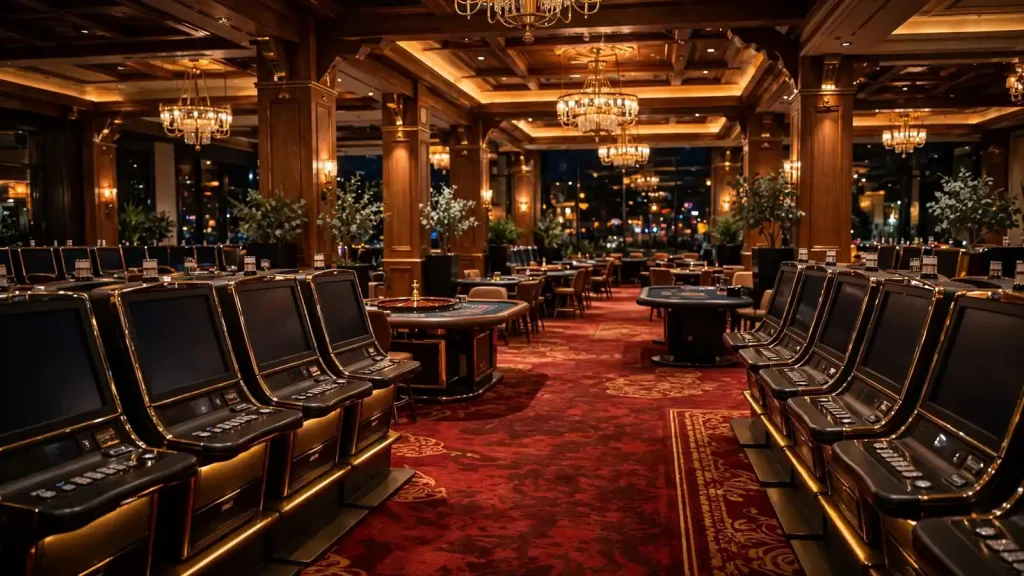
A search for a casino roulette wheel can point to several different expectations: a physical wheel shown on screen, a dealer managing a live table, or simply a roulette title presented in a casino-style interface. Those descriptions are not interchangeable. A product label does not, by itself, establish how a game is produced or what a table experience includes.
I learned to treat “live” as a specific operational claim, not a synonym for realistic graphics. In live dealer baccarat, for instance, the dealer and cards are real and the action is streamed from a studio. That does not establish the same setup for roulette. A wheel image, animation or dealer avatar should not be read as proof of a physical wheel or a live broadcast. The distinction matters because the sales language can make separate formats sound identical.
Do
- Treat “live” as a specific operational claim
- Verify if a dealer is actually English-speaking
- Distinguish between streamed and software-rendered play
Don’t
- Assume “authentic” means a physical wheel
- Mistake a translated interface for local legality
- Infer table features from a general label
“English-speaking dealers” is another service expectation, rather than a feature that can be inferred from a roulette label. The phrase could refer to spoken commentary, table chat, interface language or support around a game. These are different things. Even where a service describes a dealer as English-speaking, the practical meaning depends on the specific table and its operating details. The wording alone says little about availability, hours or the extent of interaction.
There is also a market distinction behind the phrase “live roulette Australia.” The Interactive Gambling Act 2001 makes it illegal for operators to provide real-money online casino games, including roulette, to people physically located in Australia. That legal position should not be blurred by references to an offshore casino, a studio or an English-language table. A translated interface or a stream aimed at an Australian audience does not change the operator’s obligations.
I have seen “authentic” used as shorthand for atmosphere. In practice, the useful question is what the product actually represents: a streamed dealer, a software-rendered wheel, or a label with no clear description. Without specific operational detail, the word is decoration. Small distinction. Important one.
This page does not offer or promote online casino play in Australia. It is for adults aged 18 and over. Gambling carries a risk of financial loss; MafiaCasino Notes is not liable for gambling losses. No interface, dealer or wheel presentation removes that risk.
3-Reel Slots in Australia: Features, RTP and Format
Real-Money and European Roulette: Claims That Need Evidence
“Real money” changes the question from what a roulette label describes to whether an operator may provide the service in Australia. Under the Interactive Gambling Act 2001, operators cannot offer real-money online casino games to people physically located in the country. Roulette falls within the casino-style games covered by that restriction. A page describing a way to play for cash does not alter the legal position.
I have seen promotional wording blur those two issues. “Play for real money” can sound like a simple payment setting, but it implies a service and a transaction, not merely a game title. The wording itself does not prove that an Australian-facing service is lawful, available, or appropriate. Nor does this mean that the individual player faces a fine for using an offshore site; the legal restriction described here concerns operators providing the service.
The term “European roulette” is a separate label. On its own, it does not establish which wheel or rules a particular game uses, what its payouts are, or whether it can be played for money. Those details require reliable, game-specific evidence. A familiar variant name is not a substitute for it.
That distinction matters because a polished page can make an unverified offer look settled: a named variant, a real-money button, and confident copy may create an impression of availability without demonstrating it. I treat each claim separately. A variant label is not proof of mechanics; a payment option is not proof of legal access. No leap.
The governing restriction applies to operators regardless of the wording used to describe the game. The site is not liable for gambling losses. Gambling can carry financial risk, and no description of a roulette variant removes that risk.
18+ only. Gambling can cause financial harm.
Real Money Claims
- Operators cannot legally offer real-money online casino games in Australia.
- A “European roulette” label does not prove specific mechanics or legal access.
- A real-money button does not establish that a service is lawful or available.
Roulette Strategy and Site Claims
“Strategy” is a persuasive label in casino copy. It can make a sequence of choices sound like a method for controlling the result. I have seen the same distinction matter across gambling products: a betting plan may organise decisions, but that does not make it a reliable way to win. Roulette-specific systems deserve no stronger claim without evidence to support it.
A strategy can be described as a routine for choosing stakes or deciding when to stop. That is not the same as changing how a game produces its outcome. The phrase “roulette strategy to win” turns that gap into a promise. A careful explanation should separate personal budgeting or session limits from any claim that a pattern, progression or selection system can secure a profit. The first concerns how someone manages exposure; the second requires proof.
Site claims need the same discipline. A page can present a casino as suitable for roulette, but a polished description is not evidence of local authorisation or availability. In Australia, the Interactive Gambling Act 2001 prohibits operators from providing real-money online casino games to people physically in the country, and online roulette falls within that category. Offshore branding does not alter the legal position. Nor does a site’s own description establish that its service is accessible or lawful for Australian residents.
The word “trusted” is often doing more work than the details beneath it. In practice, claims about licensing, access, payments or withdrawal terms need to be checked against the relevant legal and contractual information, not treated as proof because they appear beside a roulette offer. That distinction matters. A reassuring badge is not a legal basis.
I would also separate a site review from a recommendation. A review may describe a platform’s claims; it cannot turn prohibited service provision into a locally licensed casino option. Strategy language and site language often reinforce each other: one suggests control over outcomes, the other suggests a dependable place to pursue them. Neither implication should be accepted at face value.
No shortcut.
Roulette Table Layout and the Meaning of ‘Advantage’
A roulette table layout is the on-screen or printed arrangement used to present the game’s betting choices. Its design can affect how quickly a player recognises a selection, but visual clarity is not the same as a better mathematical position. I learned to separate those two ideas early: a tidy interface can make a decision easier to read without changing what that decision is worth.
“Advantage” is a slippery word. In gambling copy, it may refer to an operator’s mathematical edge, a player’s perceived benefit, or simply a feature presented as distinctive. Those meanings are not interchangeable. A claim that a layout is “player-friendly” might describe readable labels or an easier-to-use interface; it does not, by itself, establish a higher chance of winning or a lower cost of play.
The distinction matters because layout and mathematics answer different questions. Layout concerns how choices are displayed. An advantage calculation concerns the relationship between possible outcomes and payouts. A table can look familiar, uncluttered or generous while offering no basis for a conclusion about its mathematical terms. The sales language often blurs that boundary. The numbers do not.
I also treat words such as “favourable” and “improved” as claims that need a defined comparison. Improved in what respect: legibility, navigation, or the financial expectation of a bet? Unless the wording identifies the measure, it is not a useful assessment of advantage. A design preference should not be mistaken for a financial one.
In Australia, online casino-style games such as roulette are prohibited when offered as real-money services to people physically in the country. A polished table display does not alter that legal position. Descriptions of layout should not be read as an invitation or recommendation to use an online casino.
18+ only. Gambling can cause financial harm. MafiaCasino Notes is not liable for losses arising from gambling. The safest financial decision is not to gamble.
Can you play live dealer baccarat online?
Yes, international casino platforms that accept Australian players offer live dealer baccarat, streamed from a studio with a real dealer and physical cards. This does not mean the service is locally licensed or authorised in Australia.
Is online baccarat legal in Australia?
Australian-licensed operators cannot offer online casino games, including baccarat, under the Interactive Gambling Act 2001. The restriction applies to operators providing the service; the stated framework does not make an individual player liable merely for playing offshore.
When can I play (is it time restricted)?
Some live baccarat schedules impose time restrictions. Check the schedule for the table you choose.
How does live baccarat work?
A live dealer deals physical cards at a streamed virtual table. Players bet on the Banker, Player or a tie; the hand closest to nine wins, with card totals above ten reduced by dropping the left-hand digit.
How popular is it?
Australians regularly play baccarat online through international casino platforms that accept Australian players. These platforms offer both live dealer and RNG baccarat.
This material was created by the MafiaCasino Notes team.
Related posts
Australian Casino Parlours and Pokies: What to Know

Pokies Open Near Me in Australia: Casino Hours