MafiaCasino payment methods in Australia
 Available in US
Contents
MafiaCasino uses a hybrid cashier: conventional card and e-money options sit alongside crypto assets such as Bitcoin, Ethereum, Litecoin, Tether, Dogecoin and Ripple. Australian-dollar minimums vary meaningfully by method, so the useful comparison is not simply “fiat versus crypto” but the amount required to fund or withdraw, the operator’s processing rules and the extra conditions that apply before a cashout can move.
Withdrawal rules shape the payment choice
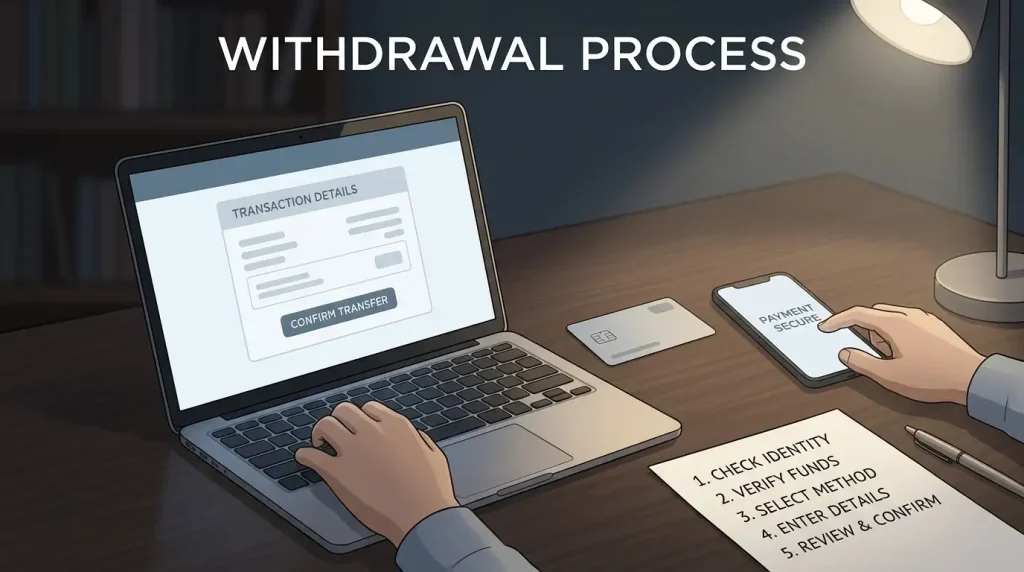
The deposit screen is only half of the payment picture. MafiaCasino’s Terms say withdrawal requests are worked through within three business days after the request and/or three business days after the previous withdrawal was paid, once applicable conditions and checks have been completed. That is an operator processing rule, not a guarantee that funds will arrive in a bank account, wallet or crypto address within the same period.
The operator also reserves the ability to route a withdrawal through a different payment system instead of the player’s preferred method. In practice, that means a deposit method should not be treated as a promise about the final cashout rail. The detailed withdrawal guide breaks down method minimums, account-level caps, pending requests and the stated processing sequence.
Verification can also intersect with a payment request. The account terms allow identity, address, payment-method and additional security checks before or after transactions. A reader who wants the document side of that process can use the account verification overview; the payment consequence is simple: a cashout may depend on both the selected rail and completion of the operator’s checks.
- A preferred withdrawal method is not guaranteed under the operator’s Terms.
- Up to three withdrawals may be pending at the same time.
- Method-specific minimum withdrawals vary from A$15 to A$100 in the Australian-dollar cashier data.
- Daily and monthly withdrawal ceilings also vary by VIP level, so a method minimum is not the only cashout constraint.
Those layers matter because a low deposit minimum can make one method look simple at the funding stage while the withdrawal side uses a different threshold, a different rail or an account-level cap. Comparing both directions avoids treating the deposit screen as the whole payment policy.
Fees and funding conditions before cashout
The Australian-dollar cashier data showed a 0% casino fee on the listed methods. That display is useful, but it should be read narrowly: it describes the fee shown by the cashier for those rails. A card issuer, bank, e-money provider or blockchain transfer can have its own costs, exchange spreads or network charges outside the casino’s displayed fee.
Crypto creates an additional layer because the transfer itself can involve price movement and blockchain costs before or after the casino transaction. The brand-specific data does not provide a stable network-fee schedule, so there is no basis for assigning a fixed blockchain fee to Bitcoin, Ethereum, Tether or another asset. The only safe comparison is the casino-side fee display plus whatever external cost the player’s own payment route creates.
MafiaCasino’s Terms also require deposited funds to be wagered at least once before withdrawal. They state a minimum monthly wagering threshold of €20 and reserve 10% or 15% commissions in specified low-rollover situations. Those clauses mean a deposit should not be understood as money that can always be moved straight back out untouched.
- The cashier can show a 0% casino fee while an external provider still applies its own charge.
- The deposit balance is subject to the operator’s 1x deposited-funds wagering rule before withdrawal.
- Specified low-rollover cases can trigger the commission clauses in the Terms.
- Crypto transfers add volatility and irreversible-transfer risk, even when the casino-side fee display is 0%.
Deposit minimums vary by method
The lowest observed deposit tier in the Australian-dollar cashier data is A$15 for Neosurf, Cash2Code, Jeton and MiFinity. Cards and many crypto methods were shown from A$20, PayID from A$30, and Bitcoin from A$45. These amounts make the payment menu uneven: choosing a rail can change the minimum funding amount by a multiple of three even before any external provider cost is considered.
That difference is most useful when matched to the withdrawal side. Cards, Jeton and MiFinity were shown with A$15 minimum withdrawals; bank transfer, Skrill and many crypto methods at A$20; PayID at A$50; and Bitcoin at A$100. The lowest deposit route is therefore not automatically the lowest withdrawal route.
| Funding method | Minimum deposit | Minimum withdrawal | Cashier fee shown |
|---|---|---|---|
| Visa / Mastercard | A$20 | A$15 | 0% |
| PayID | A$30 | A$50 | 0% |
| Jeton | A$15 | A$15 | 0% |
| MiFinity | A$15 | A$15 | 0% |
Neosurf and Cash2Code also appeared at the A$15 deposit level. Bank transfer and Skrill were part of the broader payment set, with availability differing between deposits and withdrawals. Keeping the table to rows with both directional minimums avoids implying that every listed funding method supports the same cashout path.
Crypto and fiat methods in the cashier
The crypto side covers Bitcoin, Ethereum, Litecoin, Tether, Dogecoin and Ripple, plus additional crypto options. The underlying blockchain network was not specified consistently enough to attach ERC-20, TRC-20 or another network label to the brand, so the network field belongs in the payment dialog rather than being guessed from the coin name.
| Coin | Network | Min Dep | Min WD | Speed | Fee |
|---|---|---|---|---|---|
| Bitcoin | Payment dialog | A$45 | A$100 | Terms processing rule | 0% shown |
| Ethereum, Litecoin, Tether, Dogecoin, Ripple | Payment dialog | Many crypto methods A$20 | Many crypto methods A$20 | Terms processing rule | 0% shown |
Bitcoin stands out because both its observed deposit and withdrawal minimums were higher than the common A$20 tier used by many other crypto methods. For the grouped assets, the practical takeaway is the range rather than a universal number: the cashier used A$20 across many crypto rails, but exact asset-level minimums should be read from the chosen payment row rather than assumed to be identical.
Crypto also makes the direction of the transfer more important than a simple minimum. The amount sent from a wallet, the amount credited after any external network cost and the Australian-dollar value later withdrawn can all differ even when the casino itself shows a 0% fee. Because transfers are irreversible, a mistaken address or network choice is not comparable to a card payment that can be corrected through a conventional banking workflow. The sensible comparison is therefore operational: identify the coin, confirm the network in the payment dialog, check the deposit threshold, then separately check the withdrawal threshold and destination before moving funds. That sequence does not predict cost or value; it simply keeps the casino’s own limits separate from blockchain mechanics that sit outside the cashier.
Fiat and e-money funding
On the conventional side, the payment set includes Visa and Mastercard, PayID, Neosurf, Cash2Code, Jeton, MiFinity, bank transfer and Skrill. That mix gives several ways to fund an account in Australian dollars, but the deposit and withdrawal menus are not mirror images. Some methods are more useful on one side of the transaction than the other, and the operator may ultimately route a withdrawal differently.
Cards provide a relatively low A$20 deposit entry and A$15 withdrawal minimum in the observed cashier data. PayID sits higher at A$30 to deposit and A$50 to withdraw. Jeton and MiFinity were A$15 in both directions. Those differences are large enough that the choice of rail can affect how much value must remain in the account before a withdrawal request can even meet the method minimum.
For e-money and bank rails, settlement after the casino has processed a request can still depend on the receiving provider. The operator’s three-business-day rule describes its handling of the request under the Terms; it does not replace the timing of the bank, wallet provider or blockchain once the payment leaves the casino side.
Payment questions
What is the minimum deposit at MafiaCasino?
It depends on the method. Neosurf, Cash2Code, Jeton and MiFinity were shown from A$15; cards and many crypto methods from A$20; PayID from A$30; and Bitcoin from A$45.
Does MafiaCasino charge payment fees?
The Australian-dollar cashier data showed a 0% casino fee on the listed methods. External bank, card-provider, e-money or blockchain costs can still exist outside that cashier fee.
Can a withdrawal use a different method from the deposit?
Yes. The operator’s Terms say the preferred withdrawal method is not guaranteed and that a different payment system may be used.
What the cashier structure means in practice
MafiaCasino’s payment menu is broad, but the important differences sit in the details: deposit minimums range from A$15 to A$45 across the observed methods, withdrawal minimums extend as high as A$100 for Bitcoin, the operator applies a 1x deposited-funds wagering rule before withdrawal, and cashout routing can change from the player’s preferred method. The cleanest way to compare the options is therefore by the full money path — funding threshold, external costs, account checks, withdrawal minimum and processing rules — rather than by the payment logo alone.
This material was created by the MafiaCasino Notes team.
Related posts
MafiaCasino withdrawals in Australia

MafiaCasino VIP and Coins